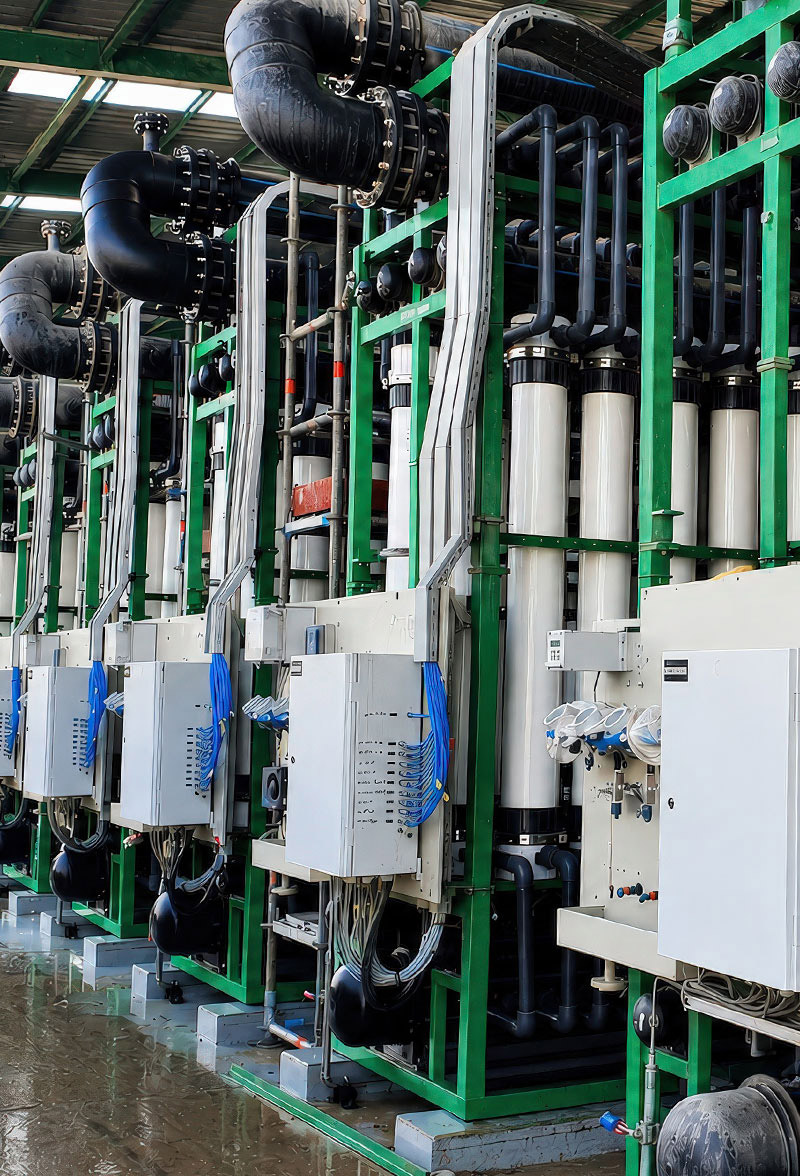
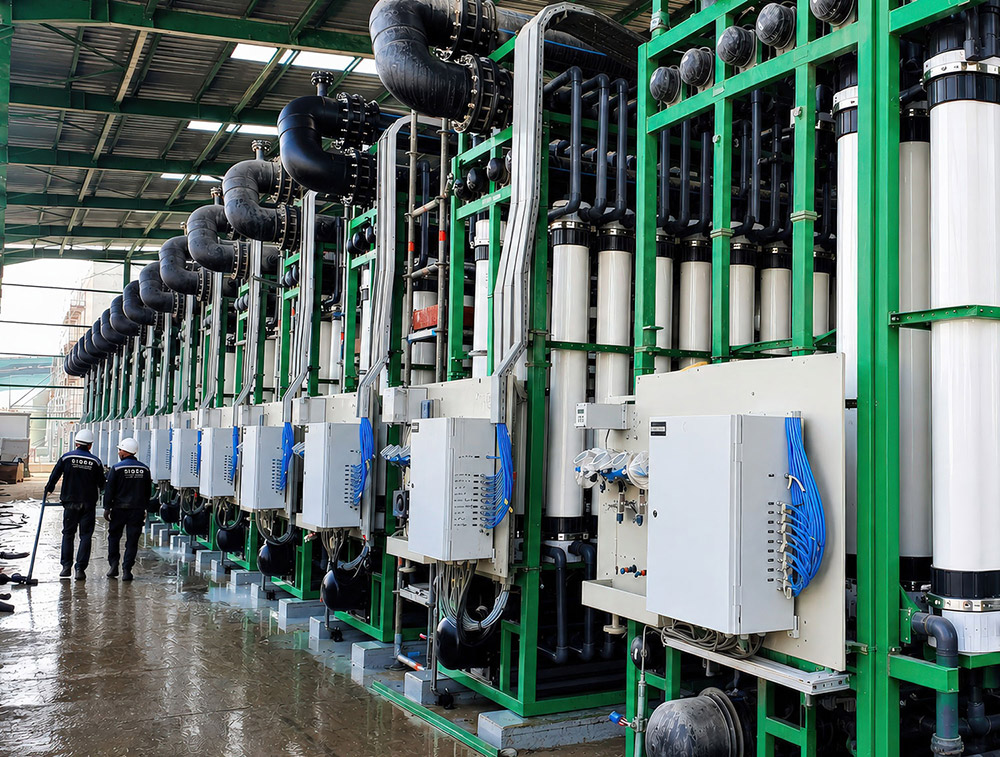
Ultrafiltration is a low-pressure, size-exclusion membrane process, typically using hollow-fiber membranes with pore sizes in the 0.02–0.05 μm range, depending on the selected membrane configuration. Under controlled transmembrane pressure, water and dissolved low-molecular-weight species pass through the membrane, while suspended solids, colloidal matter and microbiological contaminants above the membrane cut-off are retained.
SYCHEM’s UF systems are engineered according to feed-water quality and project requirements, with parameters such as membrane flux, recovery, backwash frequency, chemically enhanced cleaning and CIP strategy defined on a case-by-case basis. This creates a stable physical barrier and a more predictable filtrate quality than conventional filtration alone, especially in applications with variable turbidity or increased fouling potential.
As RO pretreatment, UF provides a consistent, low-turbidity and low-SDI feed stream, reducing the particulate and microbiological fouling load on downstream membrane arrays. This supports more stable RO operation, optimized cleaning intervals and improved system reliability in seawater, brackish water and wastewater-reuse applications.
In applications for producing drinking water from surface water sources, SYCHEM has designed, built, installed, and operates for DEYA Heraklion (the Heraklion Municipal Water Supply and Sewerage Company) the largest ultrafiltration rapid filtration plant in Greece, with a capacity of 10,000 m³/day, located in Skalani.
In tertiary treatment and industrial wastewater recovery, UF also acts as a robust polishing stage before disinfection or RO, enabling high-quality effluent for reuse applications. SYCHEM has applied this UF–RO approach in large-scale reference projects, including the MOTOR OIL Hellas seawater desalination pretreatment installation and the Hersonissos wastewater-effluent reuse plant in Crete.